
CIPS Global State of Procurement & Supply
Time to lead
At a time of explosive events and heightened global risk, procurement and supply chain professionals have become a voice that needs to be heard.

A unique moment for the profession – now it’s time to lead
In a world wrestling with multiple shocks and crises, the perspectives of the CEO and the procurement and supply chain leader are increasingly aligned. This coming together is reflected in this year’s CIPS Global State of Procurement & Supply Survey findings. The C-suite understands the significance of procurement and supply chain insight, and is bringing this perspective closer to decision-making and strategy.
This is a unique moment for the procurement and supply chain profession. It’s time to lead. – Ben Farrell, CIPS global chief executive
Key findings
Procurement has a direct line to leadership
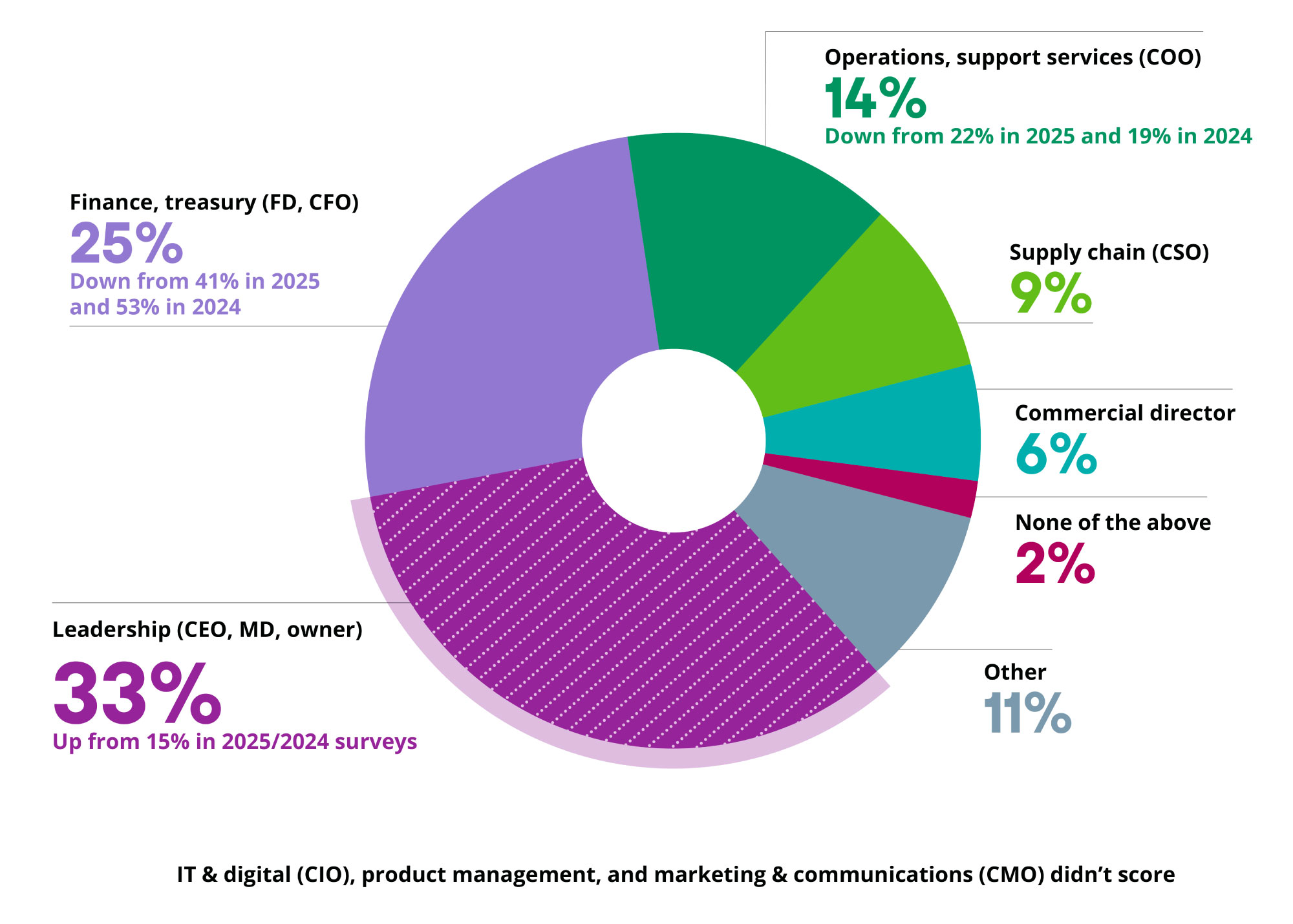
The proportion of procurement and supply chain professionals with a direct line to leadership has doubled in the last year. One-third of respondents now report to the chief executive, managing director or owner. It is striking that three-quarters now do not report to finance; two years ago, the majority did.
This shift appears to correlate with a rise in satisfaction too: 69% now believe they have the most suitable line of report – up from 55% in 2025 and 58% in 2024.
Where does procurement and supply ultimately report?
Source: CIPS Global State of Procurement & Supply Survey 2026, supported by GEP; 385 respondents
Skills priorities for 2026
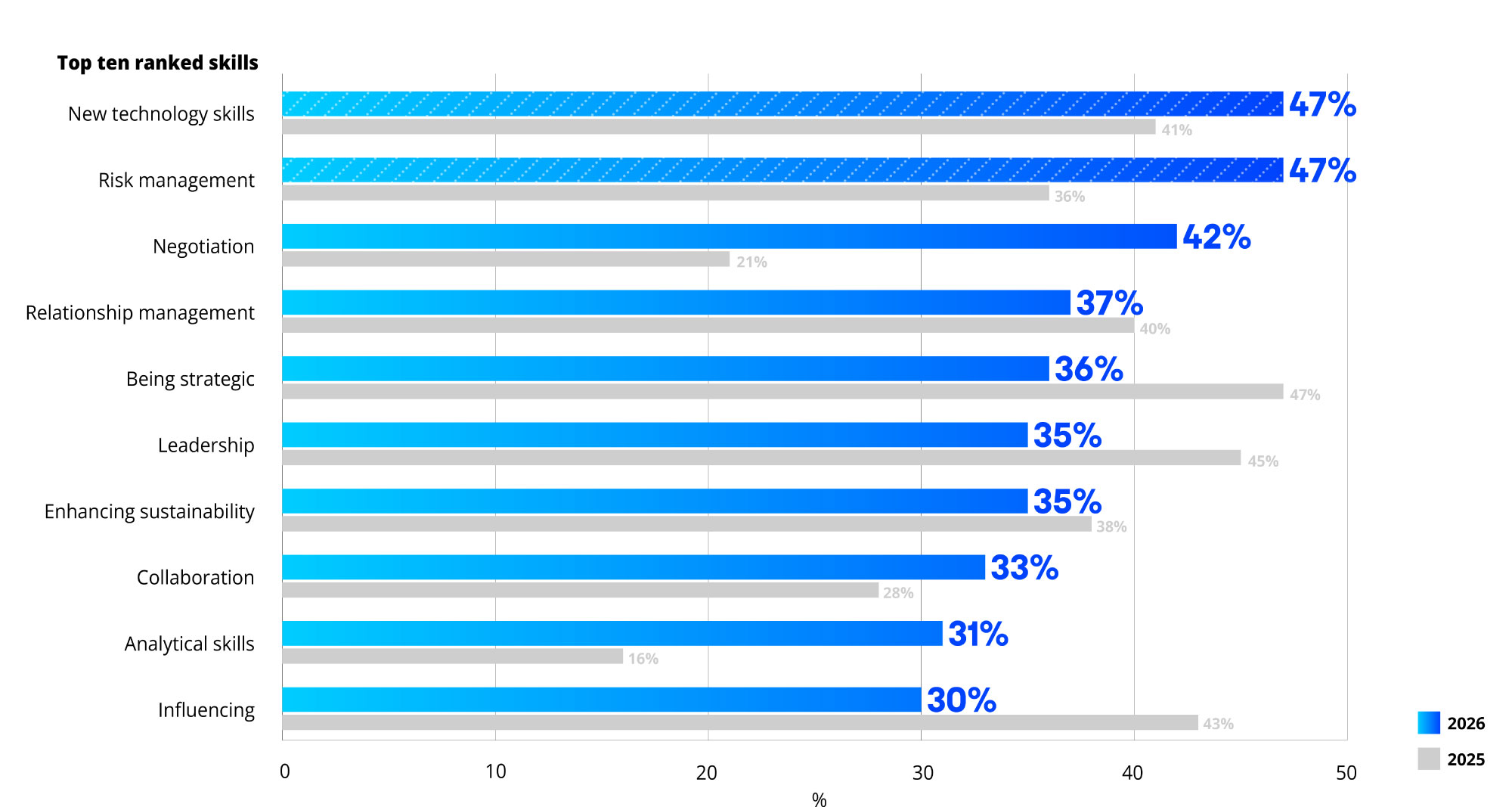
We asked respondents what top five skills or behaviours they most want to improve in the year ahead, almost half cited new technology. Risk management and negotiation skills followed closely behind. The other leading responses were relationship management, and enhancing sustainability or leadership – these tied for fifth place.
Which skills/behaviours do you most want to improve in the year ahead?
Source: CIPS Global State of Procurement & Supply Survey 2026, supported by GEP; 432 respondents
ESG is not dead
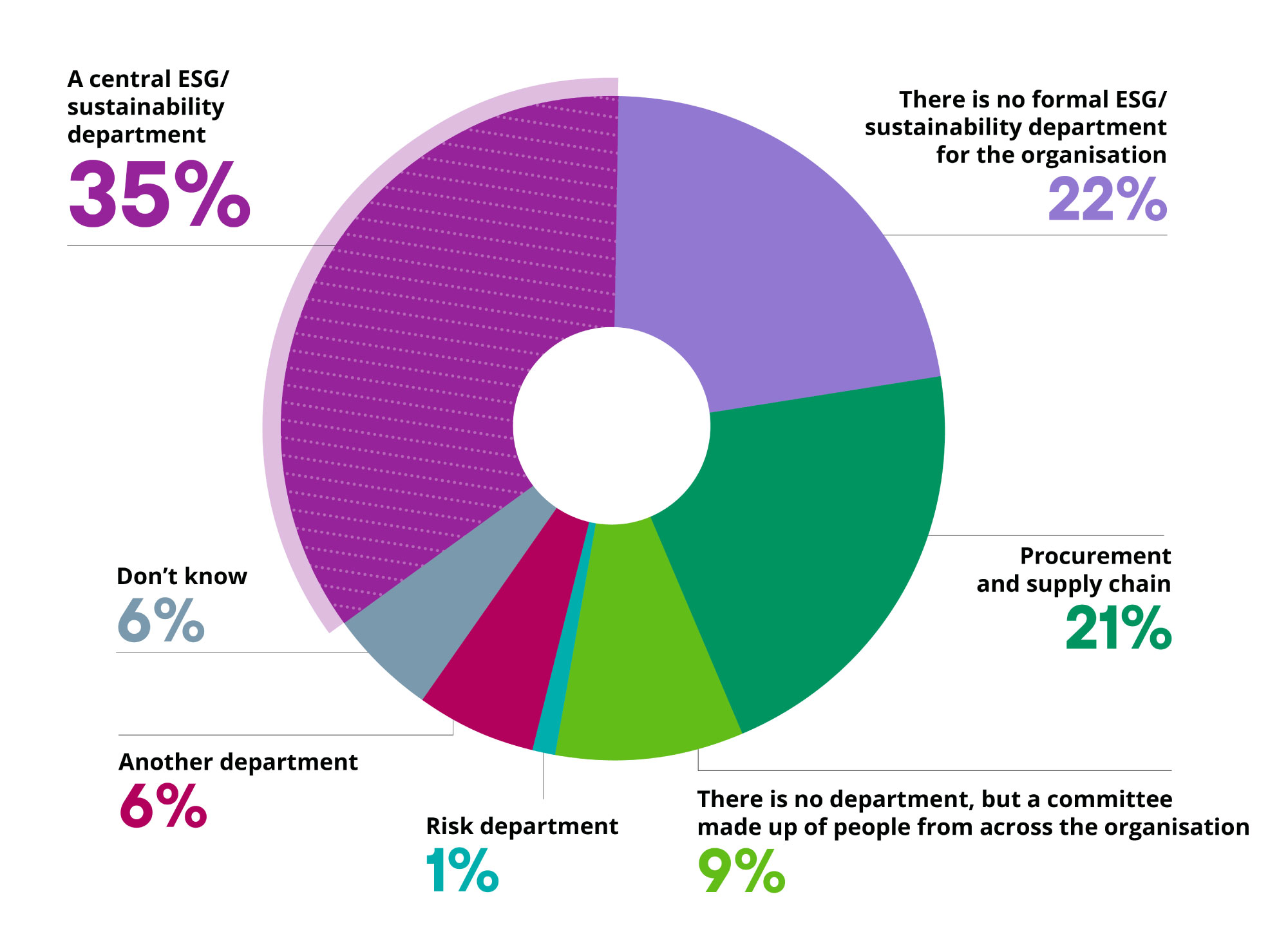
Some 93% of organisations say that the importance of sustainability is either growing or staying stable. ESG is not dead – that is clear. At the same time, responsibility for delivering ESG commitments is increasingly shifting to procurement teams, with the proportion of organisations assigning the responsibility of procurement having doubled in the last 12 months. Procurement must get ready to lead on sustainability.
Who takes responsibility for ESG/sustainability in your organisation?
Source: CIPS Global State of Procurement & Supply Survey 2026, supported by GEP; 307 respondents
CIPS Pulse survey findings
The CIPS Pulse is a quarterly panel run in conjunction with the CIPS Global State of Procurement & Supply survey, which provides regular insight into the pinch points and pressures being experienced by global procurement and supply leaders. Find out what the findings mean for you.
Q2 2026 - Global supply chains remain exposed as Ukraine concerns rise and Middle East disruption persists
The survey reveals that procurement and supply chain professionals continue to face an unusually elevated risk environment, with conflict in the Middle East, the broader geopolitical climate and the war in Ukraine dominating concerns. The findings come as global attention turns to the NATO Summit in Ankara, Türkiye, on 7–8 July, where defence, industrial resilience and security of supply are expected to be high on the agenda.
Q1 2026 - 89% say Middle East conflict is top supply chain threat
For the first time in over a year, US protectionism and US-China trade tensions have fallen out of the top three risks facing global supply chains. In their place, geopolitical conflict in the Middle East has taken hold as the dominant driver of disruption – and the Q1 2026 CIPS Pulse Survey shows procurement professionals responding with record levels of anxiety and a decisive shift towards resilience.
Q4 2025 - Cracks form in the global trading system
The Q4 2025 CIPS Pulse Survey signals rising costs across shipping and logistics, energy and inputs – sounding the alarm for consumer price increases throughout 2026 and the need to accelerate resilience strategies.
Q3 2025 - Surge of cyber-attacks on supply chains represent new threat
Tariff anxiety persists but cyber-attacks represent a new and significant threat for procurement, according to the results of the CIPS Q3 2025 Pulse Survey.
Q2 2025 - Are price hikes and supply chain shortages on the way?
Sharp price increases across shipping, fuel, and food and the risk of shortages are being driven by uncertain US tariffs, growing trade tensions between the US and China and ongoing instability in the Middle East, finds the Q2 2025 CIPS Pulse Survey.
Q1 2025 - Trump's tariff turmoil fuels record supply chain anxiety
The Q1 2025 quarterly Pulse Survey, conducted on the eve of Trump’s Liberation Day tariffs in late March, saw a marked uptick in concern around the impact of geopolitical tension.
Plus: findings analysis by CIPS global economist Dr John Glen
The Q1 2025 CIPS Pulse shows a significant rise in concern about supply chain risks unleashed by President Trump’s policy of “punishing” economies that run persistent trade surpluses with the US by imposing tariffs upon them.
CIPS Global State of Procurement & Supply reports
Data-led insight from global procurement and supply chain leaders based on the annual CIPS Global State of Procurement & Supply survey.
CIPS Global State of Procurement & Supply 2026: time to lead
At a time of explosive events and heightened global risk, procurement and supply chain professionals have become a voice that needs to be heard.
CIPS Global State of Procurement & Supply 2025: cool heads in the storm
Supply chain disruption. Tariffs. Price pressures. ESG. Procurement and supply professionals must contend with complex, shifting issues. The report reveals a profession at an inflection point – and leaders who are playing a critical role in corporate decision-making.
CIPS Global State of Procurement & Supply 2024: A profession in the spotlight
The inaugural CIPS Global State of Procurement & Supply report shows procurement and supply is at the heart of a modern economy. So how do procurement and supply leaders see their role, influence and potential impact on the issues facing the world today?