
Larger, older, more urban

What long-term shifts in the world’s population mean for procurement and supply chain professionals

When we look to the future, one factor will affect procurement and supply chains like no other: the global population.

By 2050, two billion more people will exist in the global economy, with expectations of goods and services. That population will be older, will live predominantly in cities, and while the population of Europe will shrink, in sub-Saharan Africa it will likely double.

These shifting demographics will reshape the world and, says futurist Dr Graham Norris, they play to the strengths of procurement and supply chain professionals. 

“Sitting at a key intersection of their organisations’ operations, procurement professionals are well-positioned to become future-confident leaders,” he says. But only if they develop the capacity of “strategic foresight through mental time travel.” 

In 2026, CIPS is leading The Great Conversation, a worldwide dialogue that will consider the consequences of these mega trend shifts.  

Together with our community, we will also be time-travelling to look at the capabilities required in a world defined by fast-changing technologies, geopolitical upheaval, the changing nature of business itself, and rising environmental risk. 

In the first of a special series of articles, we examine population growth and density, and the opportunities these could present for procurement and supply chain professionals. 

Two billion extra people will enter the economy by 2050

By 2050, the world population will have soared to 9.8 billion with the addition of two billion extra people. That growth will concentrate in nine countries: India, Nigeria, Pakistan, the Democratic Republic of the Congo, Ethiopia, Tanzania, Indonesia, Egypt and the United States of America. India is expected to maintain its title of most populous country in the world through to the middle of this century.

What increasing urbanisation means for Nigeria 

Expert opinion: Dr Ibrahim Labaran Ali FCIPS 

Demographic change in Nigeria is not just increasing demand; it is reshaping how procurement works, says Dr Ibrahim Labaran Ali FCIPS, assistant professor of supply chain and operations management at University of Warwick. “A fast-growing, urbanising population means procurement must move beyond cost efficiency towards resilience, access, and local sourcing, whilst responding to rapidly shifting and often informal demand patterns.”

With the population of Nigeria projected to reach 500 million in the year 2050, the challenge is the speed of change for a growing population that looks outward to developed countries, he says. “Yet, procurement teams are operating in constant volatility, where infrastructure gaps, security risks, and demand pressures must be managed simultaneously.” In future, procurement and supply chain professionals must develop stronger capability in real-time decision-making, risk management, and supplier development. 

The biggest gaps remain in digital skills, adaptability, and the ability to design procurement strategies for dynamic, high-growth environments, says Dr Labaran Ali. 

Large skyline view of Tokyo, Japan, at night
Japan has spent decades navigating the supply chain consequences of a declining population and ageing society

We’re also seeing a period of accelerating global ageing, with the fastest growing age group overall being the over-65s. And, according to the World Health Organization, by 2050, 80% of older people will be living in low- and middle-income countries. Between 2015 and 2050, the proportion of the world's population over 60 years will nearly double from 12% to 22% – a total of 2.1bn – and the number of people living to see 80 is expected to triple to 426 million.

At the young end is sub-Saharan Africa, where many countries already have median ages below 16; among the youngest are Niger, Uganda, Chad and Angola. 

“Japan has spent decades navigating the supply chain consequences of a declining population and ageing society”

Japan offers a stark preview of what lies in store for much of the globe outside of high-growth countries in Africa and Asia. With a median age of around 50 years and some 30% of its population already over 65, Japan has spent decades navigating the supply chain consequences of a declining population and ageing society, with a stagnant economy and shrinking domestic manufacturing workforce. Looking ahead, the country is seeing a surge in demand for healthcare products, assistive technologies and age-appropriate consumer goods. Find out more about the pressures that an ageing – but still active – population is putting on global supply chains as we approach 2050. 

Another global population trend is rural depopulation. This is already being witnessed in Europe, with entire towns and villages being denuded in countries from Bulgaria to Italy. 

An almost entirely urbanised population by 2050 

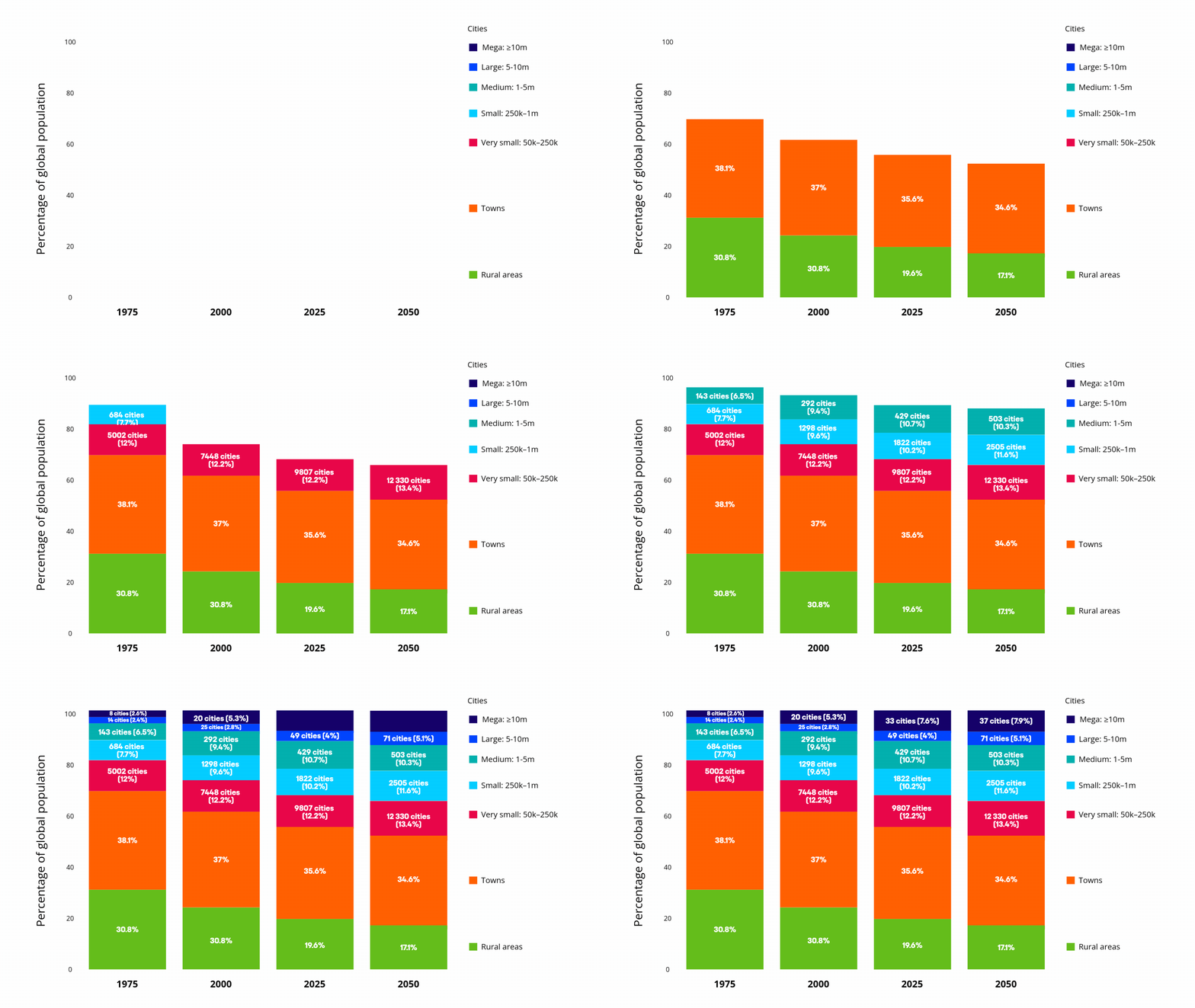
Almost 45% of the global population of 8.2 billion already live in cities – urbanised areas with a population of over 50,000 – according to the United Nations World’s Cities in 2025 report. But by 2050, 48% of the world’s 9.7 billion population will be city dwellers, and 83% will live in cities or towns. 

Graph of world population distribution by degree of urbanisation and city size class, with estimates for 1975, 2000 and 2025 and projections for 2050Graph of world population distribution by degree of urbanisation and city size class, with estimates for 1975, 2000 and 2025 and projections for 2050 
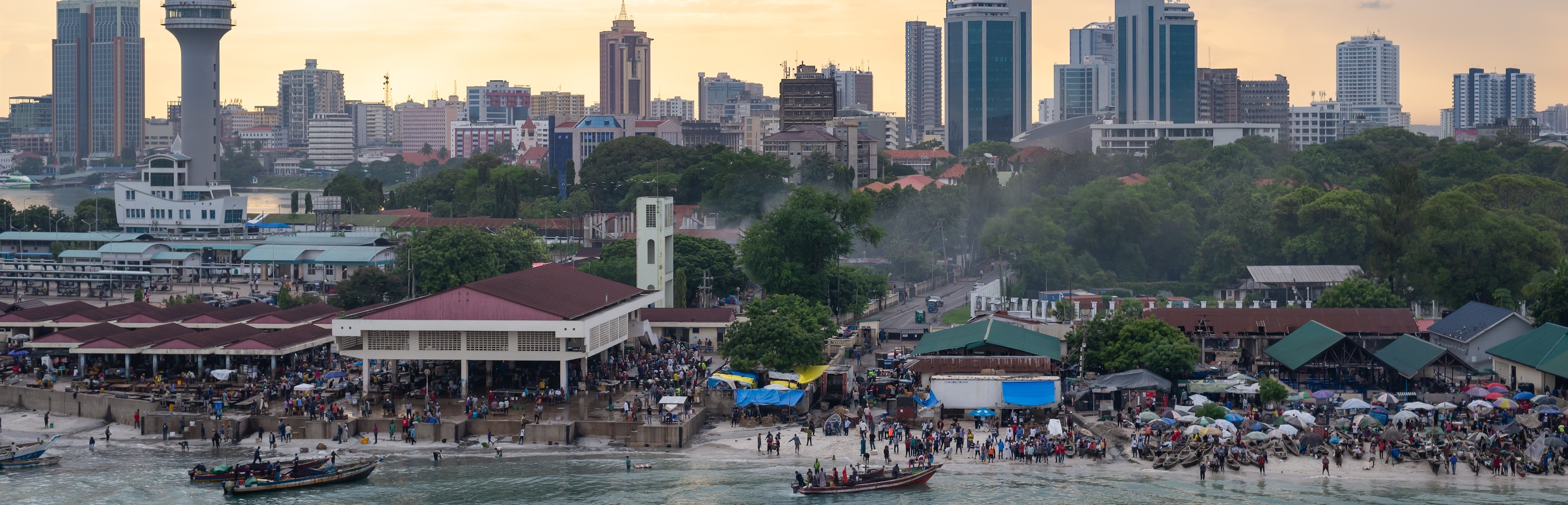
 
The number of cities themselves will grow to accommodate these new urbanites. Four new megacities will emerge by 2050 as the populations of Addis Ababa in Ethiopia, Dar es Salaam in Tanzania, Hajipur in India and Kuala Lumpur in Malaysia each surge past ten million. An additional 22 “large” cities of between 5-10 million people are set to appear.

“The shift will entail a fundamental reconfiguration of where demand is generated, how goods need to be delivered, and where supplier relationships need to be built and rebuilt.” 

The shift of billions of people into cities as birth rates fall and populations age will entail a fundamental reconfiguration of where demand is generated, how goods need to be delivered, and where supplier relationships need to be built and rebuilt. 

New megacities also represent growing procurement and supply markets, new manufacturing hubs, and new nodes in global logistics networks. In the Middle East, where new cities are being built, we are already seeing procurement and supply chain professionals playing prominent roles. Procurement professionals who build sourcing strategies that anticipate emerging urban centres will be far better placed to survive and thrive than those who wait for the transition to happen.  

Dar es Salaam skyline
Dar es Salaam, Tanzania, is one of the fastest growing cities in the world. Its population is expected to exceed 10m by 2030, making Dar es Salaam a megacity. Druid007/Shutterstock.com

Quotation mark crop containing photograph of New Delhi, India

Density and demand in India: the rapid rise of convenience

Expert opinion: Ashish Tripathi

To understand how these population trends will play out, we spoke to Ashish Tripathi, assistant vice president for supply chain management and procurement at Mumbai-based Swan Defence and Heavy Industries and a member of the supply chain and logistics committee of the Indian Chamber of Commerce. Tripathi is one of this year’s CIPS Procurement Pioneers

India’s growing urbanisation and the rise of a wealthier middle class are creating two parallel realities, says Tripathi: on one side, an ecosystem of instant, hyperlocal consumption; on the other, large-scale industrial and defence expansion. 

“The rise of India’s middle class is shifting consumption from price sensitivity toward convenience, speed, and reliability,” he says. “Demand is becoming more frequent, less planned, and increasingly driven by immediacy." 

This shift is most visible in the rapid growth of quick commerce, where deliveries are fulfilled in 10-20 minutes. “What began as a grocery-focused model has expanded across categories including fresh produce, FMCG, personal care, pharmacy products, electronics accessories, and impulse purchases such as snacks and ready-to-eat meals. 

The unit economics of this model are tightly structured, says Tripathi. Average order values range between $5–$9, while last-mile delivery costs are typically in the range of $0.7–$1.2 per order. “The model works because of high population density, concentrated demand clusters, and access to a large, flexible workforce – conditions that only a few countries can replicate at scale with competitive cost structures.” 

“Real-time demand sensing and inventory visibility are becoming core capabilities, effectively compressing supply chains from days to minutes.” 

For procurement, all this represents a fundamental shift, he says. Traditional bulk sourcing models are giving way to hyperlocal sourcing, micro-warehousing, and high-frequency replenishment cycles. “Real-time demand sensing and inventory visibility are becoming core capabilities, effectively compressing supply chains from days to minutes.” 

At the other end of the scale, Indian procurement is changing to cope with a national logistical scale-up of gargantuan proportions. 

“As megacities expand, the movement and security of goods become increasingly critical. This places maritime and defence sectors at the centre of India’s next phase of growth." 

“India’s defence spending exceeds $70–75 bn annually. Historically, 60–70% of defence procurement relied on imports. Today, that balance is shifting significantly, with approximately 65–75% of capital procurement now being sourced domestically. This transition is being driven by a strong policy push toward indigenisation and local manufacturing." 

“At the same time, rising urban demand is increasing port throughput, coastal shipping, and logistics requirements, says Tripathi. This is leading to parallel investments in commercial maritime infrastructure and naval capabilities. Shipbuilding is evolving into a dual-use ecosystem, serving both commercial and defence needs." 

“Procurement in this space is inherently complex, involving long-lead, high-value components such as engines, propulsion systems, and specialised materials. It requires tight integration across design, procurement, and execution, along with the development of robust domestic supplier ecosystems aligned with global standards.” 


Logo with text 'Join the Great Conversation'

This feature is part of The Great Conversation

The Great Conversation is a world-wide dialogue on the future of the procurement and supply chain profession.

Tell us how you see the profession evolving to meet the needs of the future.

SHARE YOUR VIEWS