
Tesla, Unilever, Kia, Foxconn and Lego are poised to make substantial investments in Monterrey, the city at the heart of Mexico’s nearshoring masterplan.
The TikTok effect: redesigning the supply chain to handle viral sales trends
Written by: Liz Connor
Written by: Liz Connor
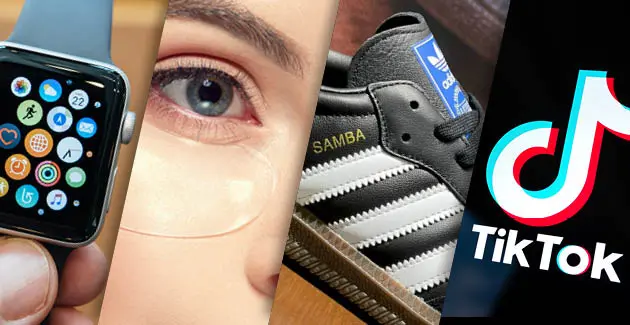
Whether it’s a pair of Adidas Samba trainers or a dupe for a high-end beauty product, TikTok has the power to propel products to sell-out status in a matter of seconds.
But while increased visibility on TikTok can undoubtedly lead to sales boosts, it also poses a big question for procurement professionals: is your end-to-end supply chain prepared for the challenge of going viral?
Images courtesy of Ascannio, ShamAn77, Hadrian and Shahid Jamil / Shutterstock
In today’s digital-first world, companies must proactively armour themselves with a resilience strategy tailored to weather these 'break the internet' moments, steering clear of product shortages, lengthy waiting lists and disgruntled customers in the process.
Lean into social listening
According to Richard Markoff, co-author of The Digital Supply Chain Challenge, one effective approach is to lean into social listening tools. “Software [like Brandwatch and Hootsuite] can track conversations, trends and mentions around products on TikTok in real-time.
“Working closely with marketing is important as it allows procurement teams to identify rising products at the start of the trend spike and adjust production and inventory levels accordingly.”

Markoff underscores that social listening isn’t limited to tracking new-to-market products either. “Unlike other platforms, TikTok's unpredictability means any product can go viral at any time. Even products that have been on the market for years can experience sudden sales spikes – so it's crucial for procurement to closely monitor online trends to stay ahead of the customer curve."
Prioritise agile manufacturing processes
Embracing agile manufacturing processes, including modular production systems, rapid prototyping, and just-in-time manufacturing, gives manufacturers the autonomy to respond swiftly to social media-driven trends by flexibly adjusting production schedules and lines as necessary.
“In the age of TikTok, it’s important to have the ability to quickly adjust production processes, schedules and resources in order to capitalise on emerging opportunities,” says Markoff.
For example, modular production lines can be easily expanded or contracted to accommodate for changes in demand, without requiring significant retooling or downtime, allowing brands to react quickly to a viral moment.
Create supply chain visibility
Many businesses now opt to integrate critical data from TikTok Shop into their existing supply chain systems and platforms.
This typically involves linking TikTok Shop APIs (Application Programming Interfaces) with inventory management systems, order management systems, and enterprise resource planning (ERP) systems. With this infrastructure in place, brands can maintain 24-hour visibility of their stock, automatically adjusting inventory levels based on real-time demand signals from TikTok Shop.
“A small surge in popularity on TikTok can easily prompt a brand to panic and overstock, which can be a costly mistake,” Markoff warns. Supply chain integration not only provides enhanced end-to-end visibility into product availability, but it also enables brands to swiftly address issues such as stockouts or shipping delays.
Offer a pre-order option
When HelloSkins Hydrogel Eye Masks went viral on TikTok last year, founder Amelia Hahn found herself inundated with thousands of new customers flocking to her website to purchase the £12 skincare solution.
“Once we were close to selling out, we made the decision to turn on our ‘pre-order’ option and placed an urgent order with our supplier so that we could replenish our stock within a week.”
“It was important for us to make sure that we were able to fulfil any pre-orders within seven days to maintain our customers' trust.” Implementing a pre-order function also enabled the brand to capture potential customers they might otherwise miss out on.
Lean into the exclusivity
Sell-out moments can be critical for businesses, but it might not necessarily be a bad thing. Markoff believes it can actually create a sense of scarcity and exclusivity around the product, driving up demand even further.
He elaborates, “If customers struggle to obtain your product and continue to generate buzz online, anticipation grows, amplifying brand awareness.”
Some brands even leverage this exclusivity by orchestrating limited edition drops throughout the year, instilling a 'buy now or miss out' urgency among consumers.

British fashion brand Charlotte Simone employs this tactic, creating a thousands-strong waitlist for its biannual stock drops, where 70% of products sell out in the first hour. Ahead of the launch, a countdown timer is set on the brand’s website and new designs are sent out to influencers to build hype.
Apple also purposely orchestrates one single announcement for its new products each year. The event led by CEO Tim Cook is streamed worldwide from Apple’s headquarters in Cupertino. Invites to the keynote often contain cryptic clues or imagery related to the unannounced products, generating media hype and Apple typically opens pre-orders for the new products shortly after the event.
Indeed, Markoff highlights the importance of seizing the TikTok hype swiftly: “Brands have a narrow window of opportunity to capitalise on virality before people move on to the next big thing. So, if your supply chain isn’t resilient enough, collaborating with marketing to explore creative solutions for strategic stock drops might be the way forward.”
Related articles
Nearshoring isn't a simple plug-and-play strategy
Volatile times have produced ripe conditions for nearshoring, but this doesn’t represent a real uncoupling of East and West, explains CIPS economist John Glen.
Retailers turn to nearshoring as supply chain disruption continues
ASOS, Boohoo and Next confirm plans to nearshore production in response to the Red Sea crisis.