
“It’s time to make ESG unmistakably part of what procurement excellence means,” says Maxfield Weiss
Written by CIPS Knowledge & Insight
Written by CIPS Knowledge & Insight
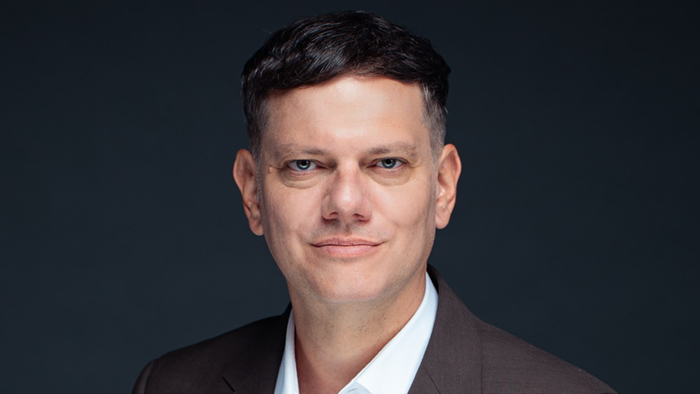
Weiss, who took up his role in December 2025, shares his experience in the sustainability field – from setting the first science-based emissions targets for the supply chain at Hewlett Packard Enterprise to groundbreaking environmental reporting CDP – and how CIPS’ sustainability training will evolve under his watch.
Tell us a bit about your background in sustainability and procurement?
For over a decade I've worked on challenges like climate change, human rights, and biodiversity loss. Early on, I learned that these aren’t problems any one single organisation or government can solve in isolation. They are collective challenges embedded in global systems, particularly in global supply chains.
I've worked from both an influence and implementation perspective throughout my career. My expertise sits in corporate sustainability and climate action, environmental disclosure and data, with a specialization in ethical sourcing. Since 2011, I've been either an employee or a stakeholder of CDP, the global environmental reporting system for companies, investors and governments - most recently as Executive Director of CDP Europe. I joined CDP at the period leading up to the The Paris Agreement for climate change, which helped shape how I think about markets, incentives and systemic change.
What became clear to me is that authority in the economy doesn't just sit with regulators alone. It also sits with non-state actors – investors, corporations, local governments, and critically, organisations that control capital and supply chains. Purchasers don't simply buy goods and services; they shape the incentives, behaviours and the outcomes across the real economy. These are the insights that have guided my career.
I’ve also worked alongside and directly in industry. I led the environmental programme for the supply chain at global tech company Hewlett Packard Enterprise. I developed the world's first science-based greenhouse gas engagement target for supply chains. But the real impact didn’t come from setting ambition alone. It came from building the governance, supplier capability, and importantly, the industry collaboration needed to make it stick.
Those experiences showed me that what ultimately motivates me is much bigger than supply chains alone. It's about how we use systems we’ve built—markets, organisations, professions—to address the defining challenges of our time: climate change, inequality, and nature loss. These are not abstract sustainability issues; they are risks to economic stability, social cohesion and long-term value creation. And ultimately, they are solved — or not — through everyday business decisions.
Procurement sits where strategy meets the real economy. It translates ambition into contracts, relationships and incentives that shape behaviors across global value chains. What I want to help drive is a shift away from sustainability as compliance control, towards a more collaborative, capability-led approach that creates shared value.
The reason I was so excited to join CIPS is quite simple: to help the profession use its influence deliberately and responsibly – to build resilience, create value and long-term impact. If we get it right, procurement doesn't just respond to the future, it actively shapes it.
Global Head of Sustainability is a newly created role at CIPS. Why is 2026 the right moment to accelerate the sustainability agenda?
I have three simple points, and they're the mantra that I've brought into CIPS: sustainability is a business imperative, procurement is a lever, and CIPS must lead.
Sustainability no longer sits alongside procurement, it happens through procurement. Access to capital, competitiveness, compliance, resilience, talent, attainment and attraction are now directly shaped by supply chain performance. At the same time, procurement is no longer viewed as a cost function, and sustainability is no longer an optional add-on. Procurement has become a strategic driver of value and business transformation, and sustainability sits at the center of that shift.
This new role at CIPS exists because the profession needs leadership, not just guidance. It needs clarity on what good looks like, clear standards and the capability to deliver them. I often say that, behind the CEO, procurement is the strongest lever organisations have to drive sustainability transformation. This is precisely why CIPS must lead as the voice of the profession – ensuring practitioners are not only capable, but empowered to use that influence responsibly and effectively.
CIPS has a responsibility to model strong ESG leadership, to convene the ecosystem and to help the profession move from conversation into action. That’s why 2026 is the right moment to accelerate.
What are your most pressing priorities in your first year?
I'm focused on three priorities. First, influence – CIPS should lead by example as a professional body. This means shaping global procurement policy and practice, while also modelling best-practice behavior within our own ogranisation. If we want to lead the market, we need a credible sustainability strategy ourselves — and we need to demonstrate that sustainability happens through procurement, both in how we operate as well as what we teach.
Second, growth. Sustainability needs to be embedded as a core competency for every procurement professional. There needs to be a baseline knowledge of sustainable procurement across the profession, supported through CIPS Global Standards and qualifications. From there, we need clear pathways for deeper expertise — advanced training, micro-credentials and certifications that support real career progression for individuals and organisations.
And then the third is thought leadership. Where sustainability now sits at the heart of value creation and risk management, CIPS has a responsibility to find what best practice looks like and to raise expectations. That means setting the standards, providing a strong voice for procurement, and giving practitioners something to be proud of — and to be measured against — from the classroom to the boardroom.
That’s the groundwork for 2026, and I'm excited to see what grows out of that.
How will those objectives impact the sustainability aspect of CIPS products?
We recently added a new dimension to the CIPS Procurement Excellence Programme (PEP) around sustainability, and it's now called the PEP ESG. PEP is already a powerful framework for defining and assessing procurement maturity - the opportunity now is to make ESG unmistakably part of what procurement excellence means. Rather than treating sustainability as a standalone pillar, its embedded across strategy and governance, supplier engagement, contracting, risk management, capability, and performance.
Ultimately, PEP ESG helps us get to a place where we no longer talk about ‘sustainability and procurement’—because sustainability simply is procurement excellence.
The ambition is simple: organisations using PEP ESG can clearly see how sustainability shows up in everyday procurement decisions—where it creates value, reduces risk and strengthens resilience—and what it takes to progress in a structured, credible way.
What’s powerful about PEP ESG is that it connects organisational transformation with professional development. As organisations raise their ESG maturity, procurement professionals build their skills, confidence and leadership capabilities needed to deliver that change.
And critically, it’s not static. Sustainability isn’t something you complete. As risks and opportunities evolve, PEP ESG will need to evolve too — so CIPS can continue to set the bar for what best-in-class sustainable procurement looks like in practice.
What will be the biggest sustainability challenge for procurement to tackle in 2026? And looking over the longer term up to 2050?
The biggest sustainability challenge for procurement in 2026 — and looking ahead to 2050 — is learning to manage interconnected risks rather than isolated issues.
We are living through a period of profound systemic pressures: climate change, nature and biodiversity loss, rising social inequality and growing risks to human health. These challenges are often discussed separately, but in reality they are deeply interconnected – and supply chains sit right at the centre of that system.
The decisions that procurement professionals make about where and how goods and services are sourced have far-reaching consequences. Not just for carbon emissions, but for biodiversity, water systems, labour conditions, human rights, and whether a transition to a low-carbon economy is fair and resilient. As climate and nature impacts accelerate, those consequences are becoming impossible to ignore.
Nature underpins the global economy in ways that we have taken for granted. Around half of our global GDP depends directly on healthy ecosystems, from agriculture and raw materials, including pharmaceuticals and healthcare products derived from biodiversity. When ecosystems degrade, supply chains become fragile, costs rise, risks multiply, and resilience is lost. Procurement feels those impacts first.
That’s why systems thinking is becoming a critical capability for the profession. Sustainable procurement is no longer about managing one issue at a time. It’s about understanding how environmental, social and economic factors interact — and making decisions that strengthen the whole system rather than shifting risk elsewhere.
Looking to 2050, procurement’s role will only grow in importance. As demand increases, regulation tightens and planetary limits become more visible, procurement is where organisational ambition meets the real economy. If the profession rises to that challenge, it won’t just respond to global pressures — it will help shape a more resilient, equitable and sustainable future.
What sustainability capabilities will organisations need to build now to survive in the future?
The organisations that will survive and thrive in the future will be the ones that stop treating sustainability as a specialist function and start treating it as a core organisational capability.
The world is defined by interconnected risks, and these challenges don't sit neatly within one team or discipline; they cut across the entire organisation and its value chain. Going forward, we need capabilities that are fundamentally different from those of the past.
The first is system thinking – our ability to understand how environmental, social and economic factors interact. This is particularly across complex global supply chains.
The second is value chain leadership – managing suppliers for compliance is no longer enough, it’s about collaboration to build shared capability. This is where procurement shifts from being an enforcer of policy to a strategic driver of sustainability and long-term value.
The third is data driven judgment – not data for its own sake, but the ability to use sustainability data to inform decisions from supplier selection, risk management, investment, innovation, and long-term strategy. The organisations that succeed will be those that turn insight into action.
The fourth is commercial sustainability capability – sustainability only scales when it's embedded into contracts, pricing models, sourcing decisions and product design. Organisations that can translate sustainability into commercial advantage will move faster, further and more credibly than those that treat it as a bolt-on.
Underlying all of this, however, is the most critical capability of all: leadership and learning. The pace of change for organisations is going to be quite radical in terms of what we expect to transition to a net zero, nature-positive and just economy. Sustainability capability is never finished, it must be continuously built, refreshed and challenged. Teams need the confidence to engage at board level, question assumptions and continuously upskill themselves and their partners. Learning development is going to become a strategic capability.
This is where my function at CIPS comes into play. Our job is to give members the capability, the tools and confidence to act through clear standards, practical guidance, learning pathways, and by modeling what good looks like. Our aim to help you move through insight to participation, and from participation to professional mastery.
For CIPS members, the call to action is simple – engage in the conversation, challenge assumptions and invest in the capabilities that are going to define the future of the profession, from classroom to boardroom. This is the moment for procurement professionals to step up our game on sustainability and lead change in a way that genuinely matters – for people, planet and the profession.
Related articles
Five ChatGPT hacks for procurement professionals
We explore how ChatGPT can help procurement and supply professionals speed up their day-to-day tasks, andshare some cautionary tips when using it.
Emerging trends for AI in procurement
How will artificial intelligence impact the future of procurement? Futurist Graham Norris explains.
4 tips for procuring AI-powered technology
Procuring AI represents an exciting opportunity for the procurement function, but also demands a well-rounded strategy. Here are four key considerations to help you buy safely and smartly.