
"Leaders must model integrity and create safety nets for experimentation"

Written by CIPS Knowledge & Insight
Written by CIPS Knowledge & Insight

Laura Spikula (right) accepting the 2025 CIPS ANZ Leader of the Year award
What does it take to lead a procurement function through change? Disciplined listening, deliberate empowerment, and the creation of a culture where calculated risk-taking is supported, according to CIPS ANZ Leader of the Year, Laura Spikula.
Head of procurement and supply chain at TasNetworks, Laura shares the secrets behind building a highly capable team – one that is critical to the delivery of power to homes and businesses on the island-state of Tasmania.
Located 240 kilometres south of mainland Australia, Tasmania has a distinct identity informed by its geography, scale and strong sense of community. That same isolation presents unique challenges for organisations operating critical infrastructure, particularly when it comes to supply chain resilience.
As owner and operator of Tasmania’s electricity transmission and distribution network, TasNetworks delivers safe and reliable power to almost 300,000 residential, commercial and industrial customers. The organisation also facilitates electricity transfer between Victoria and Tasmania via the Basslink interconnector - making reliability, continuity and resilience non-negotiable.
Reliability rests on relationships
In an island environment, dependable energy delivery is underpinned by trusted relationships across the supply chain. Severe weather events, extended lead times and highly specialised assets mean disruption is never theoretical.
“Our team thrives in this environment,” says Laura Spikula, Head of Procurement and Supply Chain at TasNetworks. “They are highly capable, creative problem-solvers who invest heavily in deep supplier and community partnerships. We have a societal obligation to keep Tasmania running – from homes and farms to hospitals and stadiums.”
While materials availability is always a consideration, Laura identifies workforce capability as the most pressing supply chain risk.
“We can adapt assets or diversify suppliers, but access to skilled labour both in-field and across our contractor base is the critical constraint,” she explains. “Tasmania is entering a once-in-a-generation infrastructure phase, with renewable energy zones, new connections and electricity generation assets to be built, maintained and connected. The workforce challenge directly impacts the state’s long-term economic future.”
Specialist technical skills often require years of development. And competition for talent is intense – particularly against mainland Australia and global markets.
Laura sees this as a shared responsibility. “We can advocate at a policy level, but real impact comes from partnerships. We are actively engaging with government, our peers, and our registered training organisation to help shape a workforce capable of delivering Tasmania’s end-to-end energy transition. We also need to get creative with recruitment strategies and understand we have a role to play in mentoring and upskilling new team members.”
Investing in capability
“Our partnership with CIPS has delivered tangible value,” Laura says. “This investment in our people is part of a broader future-skills strategy. If team members grow and stay, that’s a win. If they take those skills into the next phase of their career, that’s also a positive outcome for the profession across our industry and others.”
TasNetworks’ approach to capability development within its own procurement function provides a practical blueprint. Under Laura’s leadership, the organisation partnered with CIPS to undertake a skills gap analysis, resulting in a tailored development programme. Several team members are now progressing toward MCIPS accreditation via the Corporate Award Learning Programme.
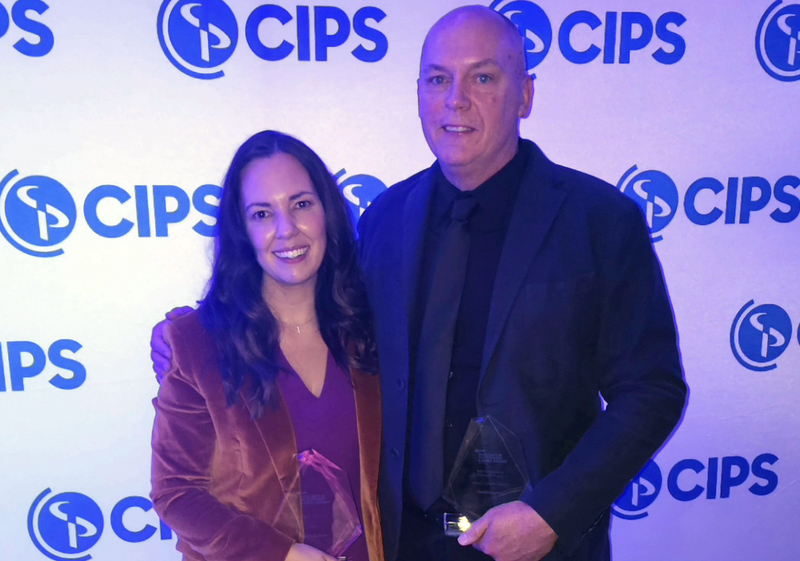
TasNetworks’ Laura Spikula and Dwayne Heffernan
Leading through transformation
Capability uplift has been one element of a broader transformation Laura has led since commencing in the role in 2022. Following an independent enterprise-wide review that identified 17 transformation priorities, Laura was accountable for one of the most complex: optimising the supply chain and redesigning the end-to-end function’s operating model.
Three years on, supply chain optimisation has delivered the largest financial benefit of all transformation programmes undertaken.
“It reinforced the strategic value our team brings and helped drive efficiencies across the organisation,” Laura explains.
Operating within the governance requirements of a state-owned enterprise while meeting commercial objectives, the team improved accessibility for stakeholders and suppliers. Contract suites were simplified, approval thresholds increased, and greater accountability was placed with contract managers.
“It’s about testing what’s reasonable, being curious, and grounding decisions in transparency and communication,” she says.
These changes occurred alongside concurrent transformation initiatives across the business, adding complexity. “We were redesigning roles, future capability requirements and how functions interact – while still delivering day-to-day outcomes.”
The redesigned structure now includes category management within a commercial team; a business services function covering indirect procurement, purchasing, fleet, facilities and data centres; a materials management team responsible for warehousing and logistics; and a performance team overseeing analytics, reporting and commitments such as modern slavery and carbon reduction.
Creating a culture of curiosity and innovation
For Laura, the defining factor behind the transformation’s success was ownership.
“We designed and delivered the initiatives ourselves,” she says. “While we leveraged third-party expertise to support framework development, consultation and collaboration were non-negotiable. Our team and our partners across the business needed to know their voices mattered.”
She acknowledges that psychological safety does not emerge automatically. “Trust has to be intentionally built. We focused on creating an environment where curiosity and innovation were encouraged, and where people felt safe to challenge and contribute.”
The leadership team asked fundamental questions: Who do we want to be? Where are we going? And how does each role contribute to enterprise and community outcomes?
“Leaders must model integrity and create safety nets for experimentation,” Laura adds. “If collaboration matters, then we expect our people to deeply understand internal customers and suppliers – which often means we find great value in spending time in the field.”
Laura’s leadership approach centres on collaboration, accountability and empowerment. The results have been measurable: millions of dollars in financial benefits delivered through supply chain optimisation, improved process flows across teams, strong recognition of the value that procurement can bring, and significant improvements in team engagement during her tenure.
These qualities underpinned her team’s nomination for CIPS ANZ Leader of the Year 2025, an award Laura describes as “the most meaningful professional recognition of my career.”
Related articles
Inside the mind of a modern procurement leader
Four megatrends will shape the future of procurement and redefine the way the profession works, according to Vodafone’s Ninian Wilson.
How purpose-driven procurement is improving elderly care
At New Zealand-based care provider Summerset Group, procurement is a critical business enabler. Senior procurement manager, Anna Laity MCIPS (centre), reveals how the team’s resident-focused, purposeful approach delivers business growth and improves the lives of elderly residents.
“I don’t look and sound like other leaders, but that’s what makes me different”
CIPS’ 2024 Leader of the Year Jacqui Rock reflects on her unique leadership style; how procurement must use the language of executive boards; and the “enormous” pressures on the NHS.