
Nine ways AI is being used right now by procurement teams
Written by Laurie Clarke
Written by Laurie Clarke
The explosion of generative AI a few years ago caught most of the world off guard. Industries raced to understand the potential of the technology, and determine where new, unexpected use cases might provide business value.
Experts share nine ways you can put AI to work for you right now, from continuous risk monitoring to improving negotiations.
In 2026, artificial intelligence is no longer only in the exploratory phase. The emergence of agentic AI proffers a tantalising world where AI agents perform the menial labour while professionals do the decision-making. This year, organisations are keen to move out of sandbox environments or pilot projects and win real return on investment.
And it's no longer just tech-savvy procurement professionals that are deploying artificial intelligence across a growing number of use cases: AI is increasingly user friendly, helping teams make sense of previously jumbled data.
Below are some of the most innovative examples of AI in procurement, as highlighted by experts during the CIPS AI Webinar Week 2025 and our 2026 edition.
1. Initial risk assessment and onboarding suppliers
Procurement professionals will know that supplier risk monitoring is hugely important, but can be onerous to carry out. Identifying, assessing and monitoring risk factors across areas like finance, operations and compliance is no mean feat. Add in complex risks stemming from reputational damage or instability linked to geopolitics or natural disasters, and it’s no wonder procurement experts are increasingly turning to AI.
“Risk assessments can be slow and are really inefficient,” said Jag Lamba, CEO and Founder Certa, a third-party risk management platform. Where does AI come in? Lamba suggests using AI in the onboarding process to scan the information provided by suppliers, as well as information gathered online, to pre-populate questionnaires with the data that procurement teams need – helping save everyone time.
“Imagine a risk assessment professional being handed a packet of 500 pages of information security documents, plus some questionnaires; or being handed a pre-completed report with all the risks clearly highlighted,” pointed out Lamba. “It's an absolute game changer.”
Human teams can then use this analysis to make their own decisions – carefully double checking all of the citations, of course. Our full webinar on Harnessing GenAI in supplier risk management is available to watch on demand on the CIPS Download platform.
2. Moving on from point-in-time analysis to forward-looking, real-time scorecards
Vendor scorecards are crucial for tracking supplier performance and risk. Historically, though, they are drawn up based on point-in-time analysis, where the metrics were true only when the scorecard was produced.
But in a fast-moving business landscape these "lagging indicators" alone are not sufficient, according to Sayan Debroy, head of Supplier Risk Solutions at WNS Procurement. "Point-in-time analysis does not hold in today's world," Debroy said. "The business world is very volatile and risk is ever-evolving. That's a key challenge with traditional risk scorecards."
Artificial intelligence can draw in multiple sources for major risk domains, combining lagging indicators with future-looking leading indicators to capture critical information and fritter out noise, Debroy added. This kind of automated intelligence helps to create real-time scorecards at scale, which allow humans to make better, more informed decisions based on current data.
"This is missing in traditional scorecards, which usually have very cursory links to risk drivers," said Debroy. "This doesn't work today."
3. Creating RFPs
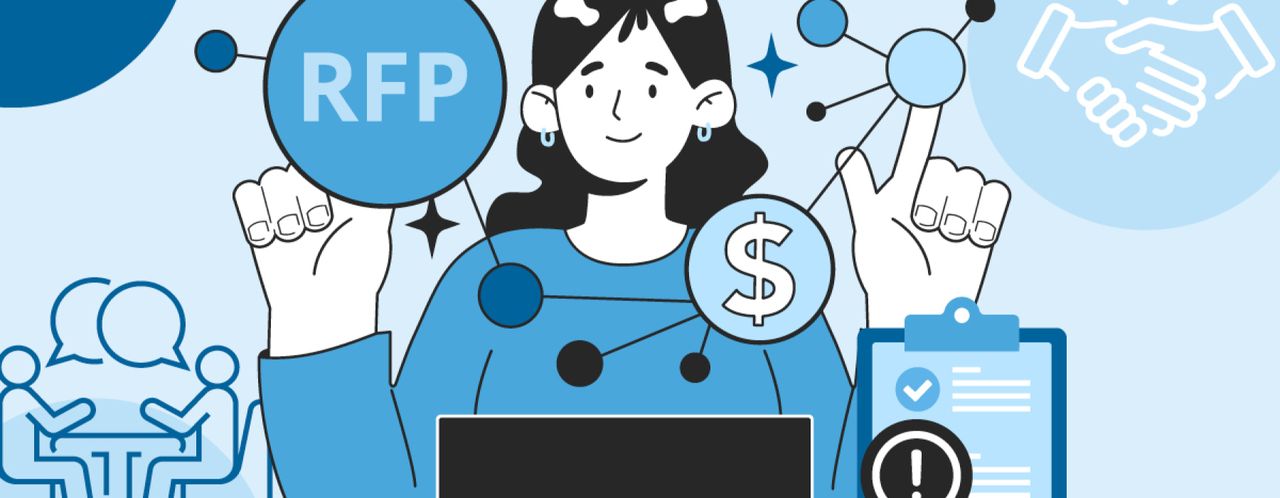
AI is also being used to create RFPs and other types of documentation. This involves using LLMs (large language models) like ChatGPT and then transferring the information back into proprietary systems, said Declan Kevener, a partner at TPP Procurement. “We just asked the system to align with the CIPS standard methodology for an RFP,” he explained.
He noted companies can also use “containers” to create secure environments for LLMs and import their own standards and procedures, but this requires speaking to the IT department. The most important thing to consider here is data security – never plug any sensitive or confidential data into chatbots.
Similarly, AI is being used to create and compare contracts. You can find out more by watching our Turning hype to action: 3 ways to use AI for faster, smarter procurement webinar on demand.
4. Roleplaying negotiation
Procurement professionals are also experimenting with the likes of ChatGPT for negotiation planning and strategising, said Kevener. This involves asking the LLM to roleplay a negotiation between yourself and a hypothetical supplier. You say, ‘here's the scope of the supplier, they've got a dominant market position, they're very tough negotiators, these are the key objectives they have to achieve this year’,” suggested Kevener.
You can then act out the negotiation scenario with the system. Kevener said the LLM will even provide template emails and scripts to use in meetings. “We found that great fun to play around with [and] it's really helping us plan negotiation strategies for some critical products.”
5. Preventing contract value leakage
AI is also taking on an emerging role in addressing contract value leakage. Tools that can read unstructured data in PDF contracts and other documents like invoices can be used to identify opportunities by comparing contracted clauses and actual spend, said Rakhi Mullick, vice president of digital transformation at GEP.
This can let procurement teams know how much money they’ve missed out on, for example, through missed early payment discounts or rebates. Find out more by watching our Agentic AI in procurement: rethinking systems, redefining roles webinar.
6. Managing tail spend
This function also comes into play with managing tail spend. AI agents can be used to identify a revenue leakage area and enter into negotiations with tail spend suppliers to help save money, said Tanya Rajesh, a solutions consultant with Zycus, a procurement software solutions company.
Kevener shared how one large retail company has trained an AI system to take care of all purchases below a certain monetary threshold. The agentic AI is programmed to collect quotes from suppliers and place an order based on whichever best suits the company’s pre-programmed criteria. “They're basically managing their tail spend using artificial intelligence,” he said.
7. Making sense of rapidly shifting compliance requirements
Managing regulation is an area of enormous complexity in global supply chains, in part because the regulatory sands are constantly shifting.
"Last year, there were 78 forms of new or amended legislation in ESG alone," said David Loseby, professor of supply chain research at Leeds University. While not all changes to these policies or directives will cut across category planning, many of them will, so it's essential to stay on top of the latest developments.
AI agents can automatically keep track of this complex, evolving regulatory terrain. More importantly, the information gathered can be alchemised into actionable insight, turning regulatory oversight into opportunity. What's more, AI regulation monitoring can automate integration into broader risk management or resilience frameworks, critical in a time of macroeconomic uncertainty.
"The ability to harvest that [data], synthesize it and understand what will have impact and what won't, then discharge that through the supply chain, is hugely, hugely important," said Loseby.
8. Mapping supply web visibility for tier-N partners
A phased implementation of the EU's pioneering CSDDD directive begins in 2027. The behemothic legislature mandates that enterprises must not only provide ESG data from tier-1 partners in their supply web, but sub-contractors too.
These so-called tier-N suppliers may be harder to trace, but CS3D requires that enterprises conduct assessments regardless: simply put, businesses need to know who they're trading with, along with the potential human rights and environmental impacts of each supplier.
That is a mammoth task for organisations with global footprints. Thankfully, artificial intelligence is playing an important role in helping businesses understand these labyrinthine supplier landscapes and assess their customers' risk levels at scale.
"The typical enterprise sustainability team is spending upwards of half of their time on data collection, audit prep, chasing suppliers, reconciling responses, on building and writing out regulatory briefs for different types of requirements," said Lucas Videla, head of product marketing at IntegrityNext. "AI is going to cut that in a major way."
Take the airline, Wizz Air. Instead of manually analysing a handful of partners at a time, it picked the IntegrityNext platform, which is informed by vast quantities of real trading data, to evaluate hundreds of its suppliers quickly. By turning to AI-powered automation, the airline was able to reduce supplier assessment time by 70%.
9. Conversational contract analysis
Contracts are the lifeblood of procurement, but they tend to stack up and, over time, risk getting siloed away in folders, emails, or long-lost company servers. This means organisations are missing out on critical intelligence, suggests Hal Marcus at enterprise cloud firm, Workday.
"Contracts aren't just documents, they're data," said Marcus. "The contract itself is an artful representation of key points, and that data is absolutely critical."
Accessing and making use of that data is another question. Manually searching for individual contracts is painful and time-consuming. But AI platforms can now search for contracts no matter where they are located in an organisation's vast systems, allowing teams to quickly search and utilise contract data, or even compile key clauses, metadata and trends from hitherto hidden documents.
Generative AI has radically changed the consumer search market by allowing users to ask questions in natural language, and receive easily understandable answers in response. By securely training AI systems on internal company data, procurement teams can now converse with chatbots to gain insights sourced on their own contracts, where complex legalese is automatically translated into plain English.
All of the panel discussions and presentations from our AI Webinar Weeks are available to watch back via our CIPS Download platform:
Related articles
Five ChatGPT hacks for procurement professionals
We explore how ChatGPT can help procurement and supply professionals speed up their day-to-day tasks, andshare some cautionary tips when using it
Emerging trends for AI in procurement
How will artificial intelligence impact the future of procurement? Futurist Graham Norris explains.
4 tips for procuring AI-powered technology
Procuring AI represents an exciting opportunity for the procurement function, but also demands a well-rounded strategy. Here are four key considerations to help you buy safely and smartly.