
How Nike transformed supply chains to survive Covid

Written by CIPS Knowledge & Insight
Written by CIPS Knowledge & Insight
Find out how Nike accelerated automation and increased geographical diversity within supply chains to overcome challenges posed by the pandemic.
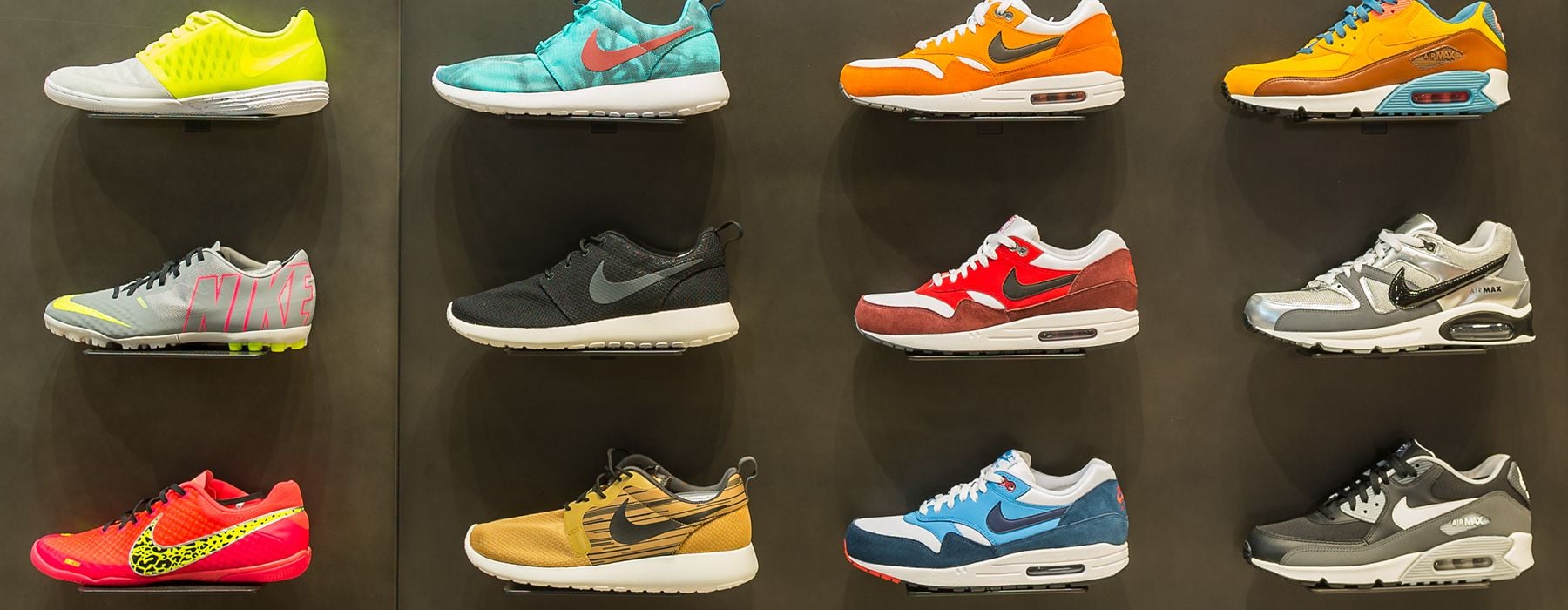
For Nike, it became clear early in the pandemic that it would need to change how it serviced its customers through its far-reaching supply chain. Chief operating officer Andrew Campion said that such change was necessary, not only to bounce back from the pandemic but also to fuel long-term growth for the business in the face of 'systemic' changes in customer behaviour.
"From early in the global pandemic, we knew that our recovery and return to growth would neither be linear nor intuitive," he said. "We believed that the immediate and significant shifts we were seeing in consumer engagement would be systemic.
"So we took decisive action and began building a digital-first supply chain to power Nike's more direct, faster and precise service of consumers, all while prioritising sustainability."
Here is how the sports giant shook up its supply chains following the onset of Covid-19:
1. Greater regional diversity
Before the pandemic, Nike's US operations were facilitated through an almost entirely centralised national distribution centre in Memphis, Tennessee.
However, the company has since deployed a multi-node network, including new regional service centres near Los Angeles to serve the west of America, in Pennsylvania to serve the east, and in Texas to serve the south to better respond to regional needs.
The company has also expanded its European distribution, developing a regional service centre in Madrid to expand its distribution network outside of its European Logistics Campus in Belgium.
2. Investing in inventory optimisation technology
The company improved its ability to predict, plan and shape one-to-one consumer demand through advanced demand-sensing and inventory optimisation technology platforms, which operate at its multi-node regional distribution networks.
Campion said: "As we continue building a digital-first supply chain globally to serve consumers more directly at scale, we have already tripled our capacity to serve digital consumers in North America and Europe, the Middle East, and Africa over just the past two holiday seasons. And we are just getting started."
3. Accelerating automation
Nike has introduced new AI and machine learning technologies to predict and order the products that will be popular among consumers and to deliver products faster and more accurately.
The company also incorporated over 1,000 "cobots" – collaborative robots – within distribution centres. These robots can sort, pack and move products, increasing speed in order processing, alleviating physical challenges and allowing Nike employees to focus on higher-value activities.
"Adversity has always been a catalyst for innovation and fuelled our competitive separation," Campion said. "The challenges and constraints imposed by the pandemic have driven our teams to transform how we serve consumers by implementing new technology platforms, automation, and process improvement in our operations."
4. Mixing up freight methods and increasing sustainability
Nike mixed up its freight and packaging methods to not only aid its supply chains but also to aid the planet.
The company utilised ground-only shipping across the US, a less carbon-intensive option than air freight. It has also looked to make circular supply chains
by introducing initiatives that take damaged shoes and refurbish them by hand to sell at selected stores.
Nike said it has reduced the number of split packages it sends out and has begun using packaging made of 65% recycled content and 35% virgin material.
"We believe that we must protect the planet and the future of sport by creating, testing and building momentum around consumer and operational solutions that address the issues we face relative to carbon, waste, water and chemistry," Campion said.
5. Investing in people
Nike prioritises investing in its people and believes this approach can also benefit the way its supply chain operates.
During the pandemic, Nike introduced enhanced Covid protocols and Covid sick leave for essential workers in manufacturing, distribution centres and retail stores to protect employees and create stability across supply chains.
It has since extended these protocols to include investment in career development, training and community volunteer opportunities.
Campion continued: "Today, our teams are fuelling a supply chain and technology transformation that will enable Nike to more directly serve consumers over the next 50 years.
"Their resiliency, strength and creativity will continue powering Nike. Our teams at Nike have been and continue to be our single greatest competitive advantage."
Related articles
Future-proofing fashion’s supply chain: what we can learn from 4 sustainable brands
As fashion’s climate problem reaches a tipping point, we take a look at the key players making strides to reduce their impact on the planet.
Emerging trends for AI in procurement
How will artificial intelligence impact the future of procurement? Futurist Graham Norris explains.
Building supply chain resilience at Vodafone
Vodafone’s Ninian Wilson shares how diversification, healthy inventory levels and an intimate understanding of its suppliers have acted as a shock absorber for global disruption.