
Middle East Crisis: After six months of chaos, what next?
Written by: Sam Achampong (FCIPS)
Written by: Sam Achampong (FCIPS)
About Sam Achampong
Sam Achampong (FCIPS) is CIPS Regional Director for the Middle East, Africa and Asia-Pacific. An advocate for strategic procurement, professional standards, and resilient supply chains, Sam has extensive experience across the UK, the Middle East, and Africa, and offers expert insights on the current crisis.
Six months into the crisis, what has changed most for procurement and supply organisations and surprised you most?
I can’t believe it's already been six months. I don’t think many would have expected this situation to last this long. Most people thought it would be for a couple of weeks at most. So that is a surprise! From a procurement and supply chain perspective, the COVID pandemic was a learning experience. The global impacts pushed professionals to rely less on single sourcing, broadly applied just-in-time models, and transactional supplier relationships. It built trust in procurement and brought it closer to board level, because availability quickly became as important as cost.
The pandemic was the perfect dress rehearsal for what is happening now. The advice and best practice guidance had not changed. The difference is that people are listening.

When the current crisis in the Middle East began, the region experienced very limited real impact at first. Organisations had scenarios and responses in place and could pivot. But disaster recovery strategies have a shelf life. As the situation continues, many organisations have remained in temporary mode, using third-party logistics, overland routes and air freight rather than deciding on a permanent ‘new normal’.
What has surprised me most is the ingenuity being used to adapt. Organisations have gone beyond textbook mitigations. Many have looked at local supply, supply chain finance, working capital, alternative routes and new transport solutions. Some of those arrangements, including greater reliance on local SMEs, are now becoming semi-permanent.
Which effects are having most impact, and which delayed or less visible consequences are only beginning to emerge?
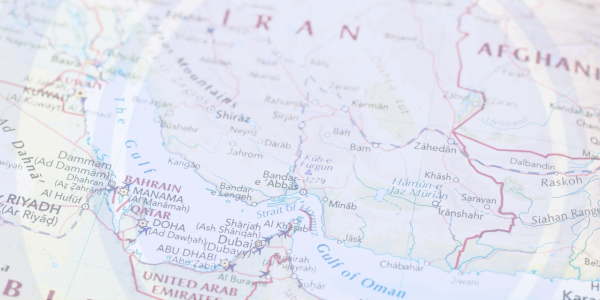
The cost and complexity of keeping supplies moving is putting organisations and supply chains under increased pressure. Goods that once came through Hormuz are often being rerouted around the Cape of Good Hope, moved overland, or sent by air freight. This brings significant price implications.
Turning to local sourcing in response can solve one problem but create others. Local suppliers are often SMEs, may be more expensive or carry different risks, and cannot always sustain 90-day payment terms. Organisations may need to pay them almost on delivery and rethink working capital. Some businesses have responded by extending payment terms with multinational suppliers and redirecting cash towards local suppliers.
There are also less visible consequences. For example, some organisations have manufacturing capability in the Gulf but cannot receive the parts needed to use it. In the short term, organisations may absorb additional freight and logistics costs, but as the disruption becomes protracted, they are likely to pass more of those costs on to customers. Governments have acted against unjustified price increases and supported essential supplies, but the longer the situation continues, the greater this underlying pressure becomes.
Which organisational responses have worked, and which have simply transferred cost or risk elsewhere?

Most of the solutions I have seen are designed to be short-term rather than long-term.
Organisations used the original routes for a reason. They were the cheapest and most efficient. Alternative routes, third-party logistics, overland transport, air freight, and local sourcing can keep goods moving, but they often shift the problems into higher cost, cash-flow pressure, or a different type of risk.
The strongest responses have been from organisations that are flexible. Some have paid newly formed local suppliers or local alliances almost on delivery. Multinational suppliers have been asked to move from 90-day to 120-day terms. That shifts working capital towards the smaller suppliers that need it most. Others have formalised a semi-permanent reliance on SMEs or found alternative routes through Saudi Arabia or Fujairah. Some companies in the Middle East have even developed trucks capable of moving materials by road in the region – something that was not previously possible.
These responses have worked, but they are not cost-free. In the short term, organisations can absorb much of the impact and increased cost. As disruption continues, some costs will be passed on. Procurement leaders are also warning suppliers that a genuine need for price increases is understandable, but organisations will remember suppliers using the crisis to their advantage.
Are organisations more resilient than they were six months ago, or have they simply become better at firefighting this crisis?
I think organisations are becoming more resilient. Again, the COVID pandemic started the process by challenging transactional behaviours such as single sourcing. This crisis has reinforced it. It has made resilience even more important and given supply chain leaders more scenarios and outcomes to consider.
The learnings from COVID, the Suez Canal disruption, the Ukraine-Russia conflict, tariffs and the current Middle East situation have all made organisations think more broadly about the risks they need to mitigate. Large price increases can damage a business, but if an item is unavailable, price becomes irrelevant. Organisations must find ways to secure supply.
Resilience is not only about logistics. Organisations must build a strategic supplier relationship before a crisis. Trying to build it during a crisis is too late. If that relationship already exists, the organisation may be prioritised for supply and receive advance warning of delays rather than discovering a problem only when a shipment fails to arrive.
Disaster response and recovery strategies have a shelf life. Organisations were able to pivot at the beginning, but prolonged disruption tests whether temporary measures can become a sustainable way of operating.
Looking ahead, what are your expectations for procurement and global supply networks?
Predicting geopolitical outcomes is difficult, but I expect ongoing disruptions until at least the end of 2026.
For the short term, many organisations will likely remain in limbo. Some may not have moved fully to a ‘new normal’ because they still see the disruption as temporary. If it continues, some temporary arrangements, such as greater reliance on local SMEs, more costly trade routes and alternative logistics, could become more formalised or semi-permanent.
A longer-term, structural issue is global interconnectedness. We are not necessarily living through the most volatile time in history, but globalisation means events in one place can affect organisations and supply chains on the other side of the world.
Shipping routes can quickly become global maritime chokepoints. Hormuz is currently in focus, but waterways such as Bab el-Mandeb, the Strait of Malacca, the Suez Canal, and the Panama Canal are a conflict or political disagreement away from major disruption. Malacca, for example, is a huge gateway for manufactured goods moving from China through Singapore. If someone took control of it, it could create widespread supply chain gridlock.
Even if a political or security agreement were reached tomorrow, which procurement and supply-chain impacts would continue and for how long?
If the Strait of Hormuz fully opened immediately, it would still take significant time to clear the backlog and return to pre-crisis traffic levels. A few months ago, the estimate being discussed was roughly three to six months.
It is difficult for anyone to give an estimated timeframe currently. There has reportedly been some unofficial movement in the Strait, and part of the backlog may have already been cleared. We don’t know for sure.
Price recovery would vary by category. Energy prices are heavily influenced by sentiment and could stabilise relatively quickly. Other costs, including for goods such as wheat and fertiliser, may remain baked into the supply chain for longer.
Reopening the Strait would therefore not mean an immediate return to normal.
What does genuine future readiness look like, and what should procurement leaders do both immediately and over the longer term?
In my opinion, future readiness starts with accepting that a supply chain leader's number one responsibility is to build a company’s resilience and keep it resilient. Things will happen, and we do not know what form they will take. An organisation must be able to ride out a storm while minimising adverse impacts.
That means continually running and rerunning scenarios. Planning should not focus only on events repeating. The question is not simply, "What if the Strait of Hormuz closes?" It is, "What do we do if we cannot receive this supply from this supplier?"
Organisations need options that let them adapt and pivot, and they need strategic supplier relationships in place before a crisis begins to make that possible.
Technology is essential to future planning and readiness. It can support scenario planning, real-time tracking of goods, services, containers and prices, real-time risk analysis, and access to more suppliers. Artificial Intelligence is increasingly helpful with that planning.
The definition of resilience has changed. Previously, it was about how quickly an organisation could recover after an event. Now it is about remaining seamless while it is happening. Leaders need to respond to this change.
What is the single assumption procurement and supply leaders must now abandon, and a single action every CPO should take?
The assumption to abandon unit price is procurement's number one priority. An item you buy cheaply today, is not cheap if it arrives late or not at all.
Every CPO should make resilience the top priority and use every relevant tool to ensure their organisation can react to supply chain disruption or geopolitical shocks. The goal should not be to become famous for managing a crisis. The goal should be for the organisation to be so well prepared, and for operations to remain so seamless, that no one needs to hear about their supply chain leader at all.